
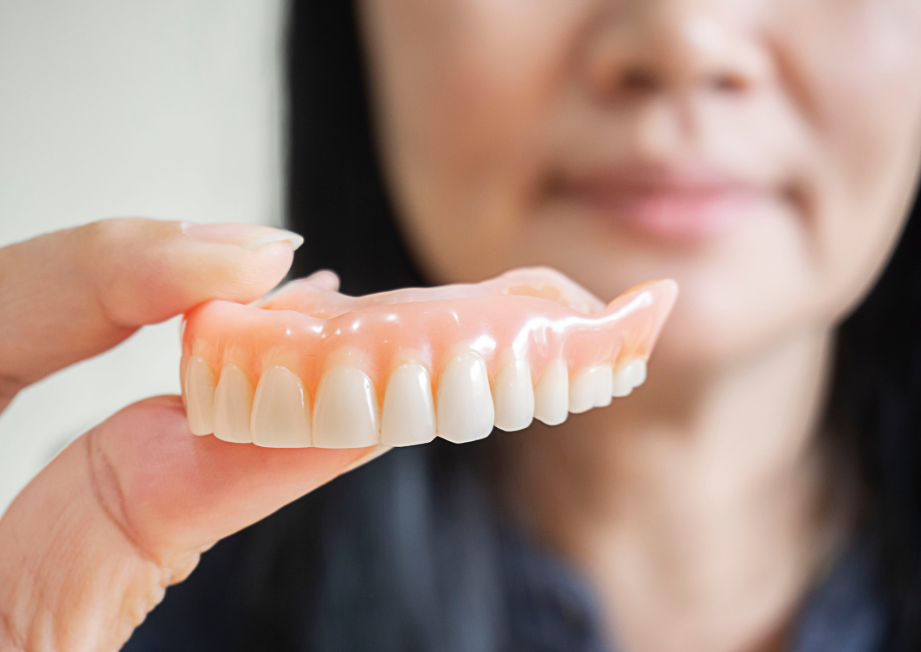
Getting dentures can be an exciting step toward restoring your smile and enjoying a full set of teeth again. However, there’s one part of the adjustment process that can take some patience: learning how to eat comfortably. Even though dentures are designed to look and function like natural teeth, they can feel unfamiliar at first.
The good news is that eating with dentures gets easier with practice. A few simple adjustments can help you feel more confident at mealtime while giving your mouth time to adapt.
Start with Soft Foods
When you’re first getting used to dentures, it’s best to start with foods that require minimal chewing. Your gums may feel tender, and your new teeth might take some getting used to.
Try incorporating soft foods like:
- Scrambled eggs
- Mashed potatoes
- Yogurt and cottage cheese
- Cooked vegetables
- Applesauce
- Oatmeal
- Soft fish
As your comfort improves, you can gradually introduce foods with firmer textures. There’s no need to rush! Give yourself time to build confidence before returning to your usual diet.
Take Small Bites and Chew Slowly
Eating with dentures requires a slightly different approach than chewing with natural teeth. Instead of taking large bites, cut your food into smaller pieces that are easier to manage.
Chew slowly and deliberately, giving yourself plenty of time to get comfortable with the movement. It can also help to use both sides of your mouth when chewing. This distributes pressure more evenly and helps prevent your dentures from shifting or becoming unbalanced.
Try to avoid rushing through meals, especially during the first few weeks.
Be Careful with Sticky and Hard Foods
Some foods can be particularly challenging when you’re adjusting to dentures. Sticky foods, such as caramel and chewing gum, may cling to your dentures or cause them to move out of position. Hard foods, including nuts, raw carrots, and hard candies, can create uncomfortable pressure on your gums.
You don’t necessarily have to avoid these foods forever, but it’s best to wait until you’re more comfortable with your dentures. When you do reintroduce them, take small bites and chew carefully.
Keep Your Mouth and Dentures Clean
Good oral hygiene is important even when you have a full set of dentures. Food particles can become trapped underneath your appliance, potentially irritating your gums and contributing to unpleasant odors.
Remove and clean your dentures according to your dentist’s instructions. You should also gently brush your gums, tongue, and palate to keep your mouth healthy.
If your dentures cause persistent soreness, rubbing, or difficulty chewing, schedule an appointment to have them evaluated. Adjustments may be necessary to improve their fit and comfort.
Give Yourself Time to Adjust
Learning to eat with dentures is a process, and everyone’s experience is a little different. With patience, practice, and a few changes to your eating habits, you can gradually return to enjoying a wider variety of foods.
If eating remains uncomfortable, your dentist can help identify ways to make the adjustment easier.
About the Practice
South Jersey Cosmetic Dentistry in Marlton, NJ, is led by Dr. Kristin B. Petulla, DDS, and Dr. Jennifer L. Kazemi, DMD. Both dentists are recognized for their dedication to gentle, holistic dental care and have earned recognition on South Jersey Magazine’s Best Dentist and Philadelphia Magazine’s Top Dentist lists. They offer a variety of preventive, restorative, and cosmetic dental services, helping patients maintain healthy smiles and feel confident in their care.
Call us at (856) 983-4846 or schedule your appointment online